
R**********a
About Candidate
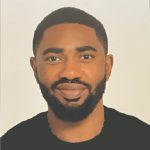
Regis Djaha is a full-time Research Technician at the Basque Center for Applied Mathematics (BCAM). He is a member of the Machine Learning group.
His research is focused on the development and evaluation of deep latent variable models in general, and in particular, variational autoencoders for unsupervised and supervised learning problems. The overarching goal is to apply these techniques across diverse fields, with his research at BCAM representing a significant contribution to the intersection of mathematics and machine learning. Regis has academic training in the foundations of partial differential equations, time series, machine learning, reinforcement learning, fluid mechanics, and climate science, with practical experience in the implementation and evaluation of such techniques in Matlab, R, Python, and PyTorch.
In July 2023, right before joining BCAM, he was awarded the opportunity to engage in an international collaborative project between Mfano Africa and the University of Oxford, participating in a virtual mentoring program. This initiative involved close collaborations between promising pre-doctoral students from sub-Saharan Africa, who aspire to pursue postgraduate studies in the mathematical sciences, and faculty at Oxford University. The work resulting from this project, entitled “Visibility Network Structure of Time Series from Real-World Systems,” involved comparing multivariate time-series correlations to a Wiener process with uncorrelated variables.
Regis Djaha completed his Master’s degree in Mathematical Sciences in June 2022 at the African Institute for Mathematics Science (AIMS) in Kigali, Rwanda. His Master’s Thesis, executed under the supervision of Yoshifumi Kimura from Nagoya University in Japan, focused on the application of partial differential equations to physical problems. Specifically, he investigated how to apply Darcy’s Law, the fundamental partial differential equation governing flows in porous media, to assess the water passage through a porous embankment for conservation and flood risk mitigation.
Prior to that, Regis Djaha obtained his Bachelor’s degree in Mathematics in 2018, and a Master’s degree in Mechanics and Energetics in 2020, both at the University Félix Houphouët-Boigny in Abidjan, Ivory Coast.
In January 2023, he was selected as a student within the African Master’s in Machine Intelligence (AMMI) program at the African Institute for Mathematical Sciences in Mbour, Senegal. He has a Master’s in Machine Intelligence.
Related Candidates